
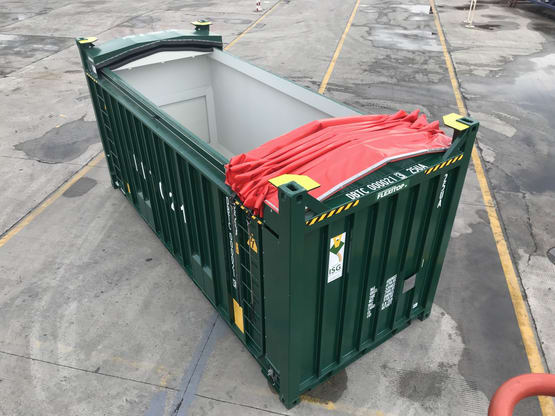
Open Top Containers for Bulk Mining and Grain
The FLEXITOP is an open top container built for bulk cargo, with a retractable tarpaulin one person can open from the ground in under 10 seconds. A standard open top takes around 30 minutes. It carries grain, coal, salt and mineral sands through road, rail and port logistics chains, and it works at sites with no container handling infrastructure, including collection direct from the farm.
ISG pioneered the retractable tarp open top container and has been building them ever since. The design runs daily across Australia and New Zealand on coal and in bulk grain handling, and is in service through Asia, South America and Europe on everything from wheat to palletised finished goods.
Every container is built to the cargo. Tell us what you are moving, how you load it and what payload you need, and we configure the container around that.
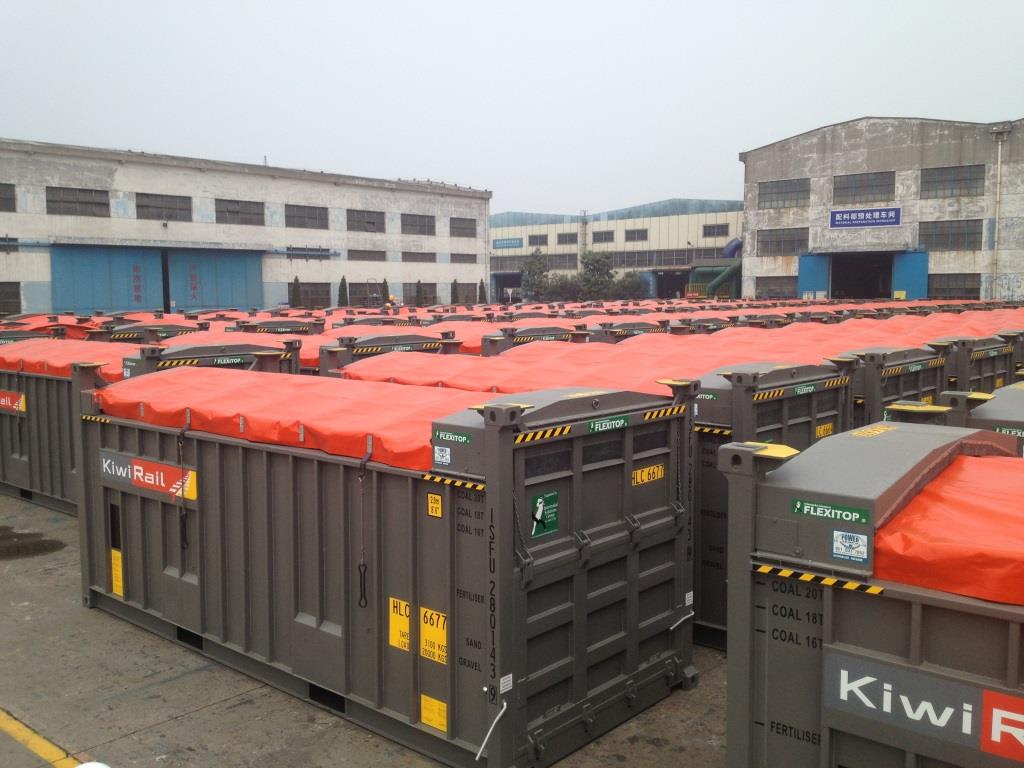
Key Features
- Retractable tarpaulin, opens and closes in under 10 seconds
- Operated from the ground with the container on the truck, so nobody has to climb
- Watertight when closed
- Stackable
- Front tipping hatches for discharge
- Optional rear doors or side hatches
- Suits bulk cargo and palletised general freight
- Heavy duty build for abrasive products such as coal
- Handled with standard container equipment at port and terminal
- Suitable for road, rail and sea
How the Retractable Tarp Works
The FLEXITOP tarpaulin sits on rails along the top of the container and slides back on a hand-operated mechanism. One person opens the full length of the container from ground level. It takes under 10 seconds, and closing it takes the same.
A conventional open top uses a fixed sheet lashed down over bows. Getting it off takes two people, a ladder and around half an hour, then the same again at the discharge end. Across a shift that time adds up. At a farm or a remote siding with no gantry and no spare labour, it is often the reason the load cannot be handled at all.
Closed, the tarp is watertight. Cargo stays dry between the loading point and the vessel. That matters for grain moisture specifications, for fertiliser, and for any product that cakes or degrades once it is wet.
Open Top Container Specifications
The 20ft bulk open top is the standard build. Dimensions and ratings are below. We quote against a different footprint or payload on request.
| Specification | Measurement |
|---|---|
| External length | 6058 mm (20 ft) |
| External width | 2438 mm (8 ft) |
| External height | 2591 mm (8 ft 6) |
| Internal length | 5820 mm |
| Internal width | 2276 mm |
| Max gross weight | 31,185 kg |
| Tare weight | 3,130 kg |
| Payload | 28,055 kg |
| Cubic capacity | 32.1 cum |
| Stacking test load | 27,430 kg |
Build detail:
- 1200 mm high rear tipping hatch
- Hatch locking mechanism operated from the side of the container
- Hatches fitted with grain locks for safety on road and rail
- 5 mm steel floor plate
- Deflectors fitted to the top rails
- Fork pockets
What These Containers Carry
Grain, coal, salt, mineral sands, fertiliser and woodchip all move in these containers, as does biomass for power generation. So do palletised finished goods, which lets an operator send bulk out and bring freight back instead of running empty in one direction.
The tarp is why the range is so wide. Bulk products need to be loaded from the top and kept dry. Palletised freight needs a door. A container that does both earns its keep on more of the round trip.
Cargo density decides the container. When the weight limit arrives long before the box is full, which is what happens with ore and mineral concentrate, a half height container for dense cargo carries more per trip. When discharge happens by rotation instead of tipping, ore containers built for rotation do the work. If neither of those is quite it, the full range of bulk shipping containers covers side tipping, high cube and multipurpose builds as well.
Farm to Rail Distribution
Open top containers suit collection from multiple sites with limited infrastructure. The container goes out to the farm on a truck or a container trailer. The grower opens the tarpaulin from the ground and loads it directly. The container returns to the logistics hub, where it is handled with standard container equipment and moved on by road or rail.
No gantry is needed at the loading point and nobody has to climb onto the container. That puts the container within reach of growers and small sites a conventional open top cannot service. Paired with grain loading and storage equipment, the whole chain from paddock to vessel runs on the one container.
Customised Open Top Containers
ISG configures the FLEXITOP to the application. For Smiths Crisps in Australia, potatoes are received through the top and discharged through a front tipping hatch. Rear doors were added so palletised finished product could go back out to supermarkets in the same unit.
For a customer in Vietnam, side hatches were fitted for easier unloading of wheat and rice cargo.
If the cargo, loading method, or discharge point does not suit a standard build, that is usually a design question rather than a reason to compromise. Send us the details, and we will work to it. Our wider containerised bulk handling systems cover loading, transport and discharge as one chain.
FAQs
How long does the tarp take to open?
Under 10 seconds, by one person, from the ground, with the container still sitting on the truck. A conventional lashed tarpaulin takes around 30 minutes and needs two people and a ladder. Over a shift moving twenty containers, that gap is the difference between finishing the job and running out of daylight.
Is an open top container watertight?
Yes, with the tarpaulin closed and secured. The tarp seals against the top rails, so cargo stays dry from the loading point through to the vessel. That matters most for grain in containers, where moisture content is written into the contract, and for salt and fertiliser, which cake once they get wet.
Can it be handled with standard container equipment?
Yes. It is built to standard ISO dimensions with corner castings in the usual positions, so it lifts with the same spreaders, reach stackers and side loaders as any other container in the terminal. No special handling gear is needed at either end of the trip. It also stacks, so it stores in the same footprint as a general-purpose box.
What payload does a 20ft open top container carry?
28,055 kg on the standard build, from a max gross of 31,185 kg and a tare of 3,130 kg. Cubic capacity is 32.1 cum. If your route has a lower axle or gross limit, tell us, and we will build to it.
Can the same container carry palletised freight?
Yes, with rear doors fitted. Bulk goes in through the top and finished product comes back out through the doors on pallets. Smiths Crisps run exactly that cycle in Australia: potatoes in, packaged product out to supermarkets, one container doing both legs.
Is it suitable for coal and other abrasive cargo?
Yes. The floor is 5 mm steel plate, and the build is heavy-duty throughout, which is why the design has run for years on coal across Australia and New Zealand. Abrasive and sharp-edged cargo wears a light container out quickly, and repair time costs more than the steel does.
What is the difference between an open top container and a half height container?
An open top is full height with a retractable or removable top, so it takes volume cargo and loads from above. A half height container is half the height with a lower centre of gravity, built for dense products such as ore and mineral concentrate where you hit the weight limit long before the container is full. Cargo density decides which one you want.
Can you build to a size other than 20ft?
Yes. 20ft is the standard build, and we design to other footprints, payloads and discharge arrangements. Send us the cargo, the loading method and the route, and we will come back with a configuration. Start that with our engineering team.